
The short answer
A heat pump is a good fit for most Canoga Park homes because it cools well through hot valley summers and heats efficiently through mild winters. The right choice depends on your ducts, electrical panel, and current equipment, which we check before recommending anything. Rebates depend on which utility serves your address, and we confirm the current offer before quoting it.
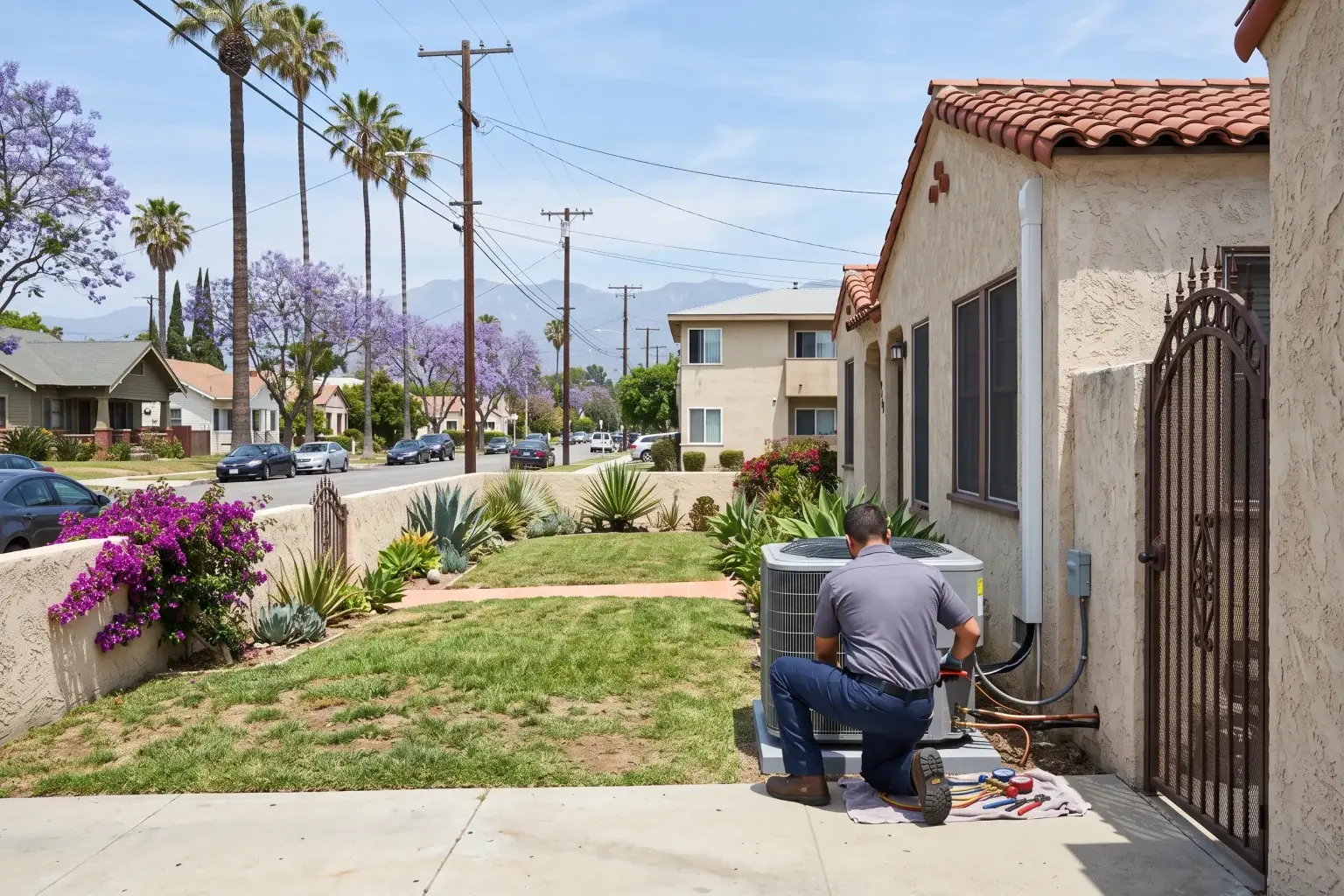
A heat pump heats and cools your home with one electric system. It moves heat into or out of the house instead of burning gas to make it. That suits Canoga Park and the rest of the west San Fernando Valley. Inland summers here run much hotter than near the coast, and fall Santa Ana winds can bring hot, dry stretches. Winters are mild enough that a properly sized heat pump can handle heating comfortably. Breezanta installs heat pump systems for homeowners in Canoga Park and nearby communities. This page covers when a heat pump makes sense, what we look at before recommending one, your options if you already have equipment, what drives the cost, and how a visit with us works.
Signs It May Be Time for a Heat Pump
Most homeowners start thinking about a heat pump when their current setup stops working for them. These are the reasons we hear most often:
None of these means you have to replace anything today. They are good reasons to get an honest assessment before the next breakdown forces a rushed decision in the middle of a heat wave.
- Your central air conditioner is aging, needs repeated repairs, or can't keep up on hot valley afternoons.
- Your gas furnace is due for replacement, and you'd rather not install another gas appliance.
- You want one system for heating and cooling instead of a separate furnace and AC.
- Certain rooms, an addition, or a converted garage never get comfortable from the existing ducts.
- Your current system uses an older refrigerant that is getting harder to service.
- You've added solar or are planning other electric upgrades and want your heating to run on electricity too.
What We Check Before Recommending a System
A heat pump only performs well when it's matched to the house. Before we suggest any equipment, we look at:
We'll tell you what we find, including problems that would affect any system you choose, such as leaky ducts or a panel with no room for new circuits.
- Home size, layout, insulation, windows, and sun exposure. This lets us size the system to your actual heating and cooling load instead of estimating from square footage alone.
- Existing ductwork, including its condition, leaks, sizing, and whether it can carry the airflow a heat pump needs.
- Electrical panel capacity and available circuits, especially if a gas furnace is being replaced.
- Where the outdoor unit can go, with attention to clearance, noise near bedrooms and neighbors, and drainage.
- Whether a ducted system, a ductless setup, or a mix fits the house better.
- How you use the home, such as rooms that sit empty, a home office, or family members who run warm or cold.
Repair, Replace, or Convert: Your Options
If you already have a heat pump that isn't working right, repair is often the first step. Many problems can be fixed without replacing the system, including a failed capacitor, a refrigerant leak, a faulty reversing valve, an outdoor coil that keeps icing up, or a thermostat that was set up incorrectly. We'll explain what's wrong and whether the repair makes sense for the age and condition of the equipment.
If you have a gas furnace and central AC, you usually have three paths. You can replace the AC with a heat pump and keep the furnace as backup heat. You can replace both with an all-electric heat pump system. Or you can add ductless heat pumps for rooms the ducts don't serve well.
Gas furnace replacement in the Los Angeles region is affected by South Coast AQMD Rule 1111. The rule limits NOx emissions from gas furnaces, and the air district has been amending it toward zero-emission requirements. The district sets and revises the compliance dates, so if you're weighing a new furnace against a heat pump, check the current rule. We'll go over how it may apply to your situation.
Replacement is usually the better use of your money when the equipment is old, needs a major repair, or no longer fits how you use the house. We'll lay out the options side by side so you can decide.
What Affects the Cost of a Heat Pump Installation
Every installation is quoted for the specific home. These are the main factors:
Rebates can offset part of the cost, but they depend on who supplies your electricity. LADWP residential customers can apply for Consumer Rebate Program rebates on qualifying heat pump systems. The amount is based on the unit's SEER2/HSPF2 rating. You file the application after the equipment is purchased and installed, within 12 months of purchase. Many homes outside the City of Los Angeles are served by Southern California Edison instead, and the available offers are different. We confirm the current offer for your address before including it in a quote.
The federal Energy Efficient Home Improvement Credit (25C) covered qualifying heat pumps placed in service before December 31, 2025. It is not available for installations now.
- System type: ducted central, ductless mini-split, or a combination.
- Capacity and efficiency. Higher SEER2 and HSPF2 ratings usually cost more up front and use less electricity over time.
- Duct condition and whether sealing, repairs, or new runs are needed.
- Electrical work, such as a dedicated circuit or a panel upgrade.
- Removal of old equipment and capping of an unused gas line.
- Unit placement, line set length, and whether the outdoor unit needs a pad or wall bracket.
- Required permits and inspection.
How a Visit Works
We keep the process straightforward so you know what's happening at each step:
If something comes up during the job that changes the plan, such as hidden duct damage, we'll stop and talk with you before doing additional work.
- Scheduling: Tell us about your home, your current system, and what isn't working for you.
- On-site assessment: A technician walks through the house, inspects your existing equipment, ducts, and electrical panel, looks at outdoor placement, and asks how you use each space.
- Written recommendation: We explain your options, the reasons behind each one, and which rebates your address may qualify for.
- Installation: We protect floors, remove old equipment, set the indoor and outdoor units, and connect the refrigerant lines, wiring, and drains. Then we test the system in both heating and cooling modes.
- Walkthrough: We show you how to use the thermostat, how to change the filter, and what routine maintenance keeps the system running well.
Heat Pump Installation by city
- Heat Pump Installation in Hidden Hills
- Heat Pump Installation in Calabasas
- Heat Pump Installation in Simi Valley
- Heat Pump Installation in Agoura Hills
- Heat Pump Installation in San Fernando
- Heat Pump Installation in Westlake Village
- Heat Pump Installation in Santa Monica
- Heat Pump Installation in Malibu
- Heat Pump Installation in Beverly Hills
- Heat Pump Installation in Thousand Oaks
- Heat Pump Installation in West Hollywood
- Heat Pump Installation in Moorpark