The short answer
If your furnace blows cool air, won't stay lit, cycles constantly, or makes new noises, it likely needs repair. Breezanta HVAC Repair Service finds the cause, explains your repair and replacement options, and gives you the price before any work starts.
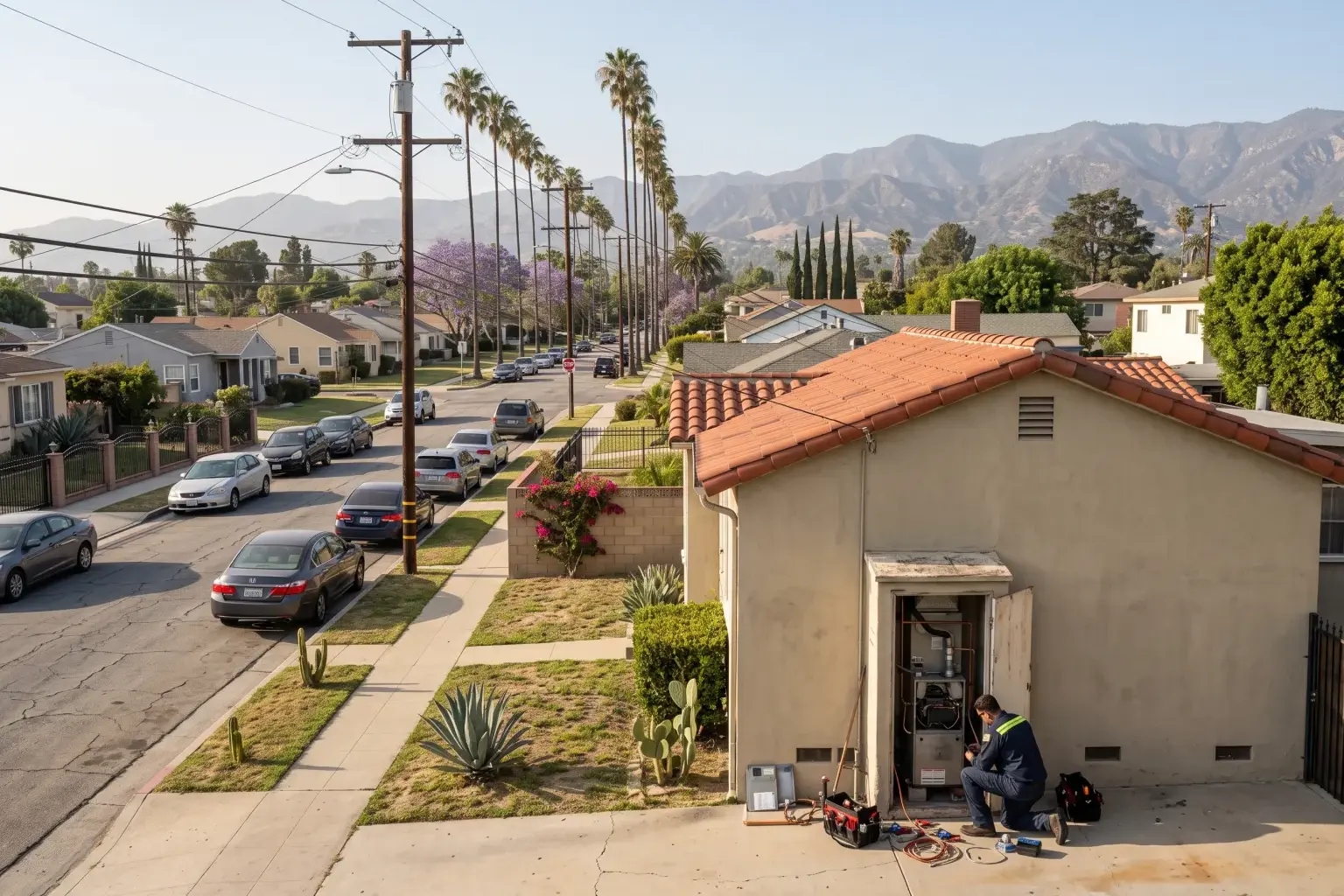
Southern California winters are mild, but nights in the West San Fernando Valley can still get cold enough that a working furnace matters from late fall through early spring. When yours won't light, blows cool air, cycles on and off, or starts making new noises, Breezanta HVAC Repair Service can diagnose the problem and explain your options in plain terms. We work on gas furnaces and forced-air heating systems in homes across Canoga Park and nearby communities, including West Hills, Winnetka, Woodland Hills, Reseda, and Chatsworth. This page covers the warning signs, what our technicians inspect, how to think about repair versus replacement, what affects the cost, and what to expect when we come out.
Signs Your Furnace Needs Repair
Many furnaces in the area sit idle through the long, dry summer, so problems often show up the first chilly evening you turn the heat on. Dust on the burners and sensors, a weak igniter, or a clogged filter can all surface at once. Watch for these signs:
If you smell gas or your carbon monoxide alarm goes off, leave the house first and call your gas utility or 911 from outside. Don't try to restart the furnace. Once the immediate danger has been handled, we can inspect the system.
- The furnace runs but blows cool or lukewarm air
- It won't start at all, or the burners light and then shut off after a few seconds
- Short cycling: the system turns on and off frequently without warming the house
- Banging, squealing, scraping, or rattling sounds from the unit or the ductwork
- A burning smell that lasts beyond the first few minutes of the season's first run
- Some rooms stay cold while others are comfortable
- Heating bills rising without any change in how you use the system
- A yellow or flickering burner flame instead of a steady blue one
- Your carbon monoxide alarm sounds, or people in the house get headaches or nausea when the heat is on
What We Check During a Furnace Repair Visit
A furnace problem can start with the thermostat, the electrical supply, the gas side, the airflow, or the controls. We work through the system in order instead of guessing. Our technicians typically check:
We'll show you what we found. We'll also explain which issue is causing the symptom and which items are only worth watching for now.
- Thermostat settings, wiring, and batteries, and whether the thermostat is actually calling for heat
- Air filter condition and return-air airflow
- The igniter or pilot assembly and the flame sensor
- Gas valve operation and burner flame quality
- Limit switches, pressure switches, and other safety controls
- The inducer motor, blower motor, capacitor, and blower wheel
- Control board error codes and wiring connections
- Heat exchanger condition, looking for cracks or signs of overheating
- Venting and flue connections, plus a carbon monoxide check
- The condensate drain and trap on high-efficiency furnaces
Repair or Replace: Weighing Your Options
Most furnace calls end in a repair. A new igniter, flame sensor, capacitor, switch, or motor often gets the system running again. Repair usually makes sense when the furnace is otherwise sound, the heat exchanger is intact, and the part you need is available.
Replacement deserves a closer look in a few situations: the heat exchanger is cracked, repairs are becoming frequent, or parts are hard to find. It's also worth considering if the system can't keep the house comfortable even when it's working. We'll give you our straightforward read on both paths, and you decide.
If you're leaning toward a new gas furnace, note that South Coast AQMD Rule 1111 limits NOx emissions from natural-gas central furnaces sold and installed in the Los Angeles region. The air district has been amending the rule toward zero-emission requirements, and it sets and revises the compliance dates. Check the current version of the rule before you plan a replacement. We can talk through how it may affect your equipment choices.
Many homeowners are also considering heat pumps, which handle both heating and cooling. That can suit this area well. Los Angeles has a Mediterranean climate with mild winters, and inland valley neighborhoods run much hotter in summer than areas near the coast, so cooling capacity matters too.
LADWP residential electric customers can apply for Consumer Rebate Program rebates on qualifying heat pump systems. The amount depends on the unit's SEER2 and HSPF2 ratings. You file the application after the equipment is purchased and installed, within 12 months of purchase.
Many homes outside the City of Los Angeles are served by Southern California Edison instead, so the rebates available depend on the utility that serves your address. We confirm the current offer before quoting it. The federal 25C tax credit covered qualifying heat pumps placed in service before December 31, 2025, and it isn't available for new installations now.
What Affects the Cost of Furnace Repair
We can't give an accurate price until we've diagnosed the furnace, because the same symptom can have very different causes. These are the main factors that affect the cost of a repair:
Before we start any repair, we'll explain the work and give you the price. You can approve it, ask questions, or take time to decide.
- Which part failed: cleaning a flame sensor is a smaller job than replacing a blower motor or control board
- Part availability, especially for older or less common furnace models
- Where the furnace is installed, since attics, crawlspaces, and tight closets take longer to work in
- Whether several problems are connected, such as a dirty filter that caused a limit switch to trip repeatedly
- Furnace type and efficiency level, since high-efficiency models have additional components to check and service
How a Furnace Repair Visit Works
When you contact us, we'll ask what the furnace is doing, how old it is if you know, and where it's installed. That helps the technician arrive prepared.
On site, the technician listens to your description, runs the system, and works through the inspection steps above to find the cause. You'll get a clear explanation of the problem and your options, with the price before any work begins.
If you approve the repair, we complete it and then run the furnace through full heating cycles. We also confirm that the safety controls and venting work correctly.
Before leaving, we'll point out anything worth keeping an eye on. We'll also share simple upkeep tips, like changing the filter regularly and keeping the area around the furnace clear of stored items.
Furnace Repair by city
- Furnace Repair in Hidden Hills
- Furnace Repair in Calabasas
- Furnace Repair in Simi Valley
- Furnace Repair in Agoura Hills
- Furnace Repair in San Fernando
- Furnace Repair in Westlake Village
- Furnace Repair in Santa Monica
- Furnace Repair in Malibu
- Furnace Repair in Beverly Hills
- Furnace Repair in Thousand Oaks
- Furnace Repair in West Hollywood
- Furnace Repair in Moorpark